MENU
Punarva Natural
Healthcare Centre

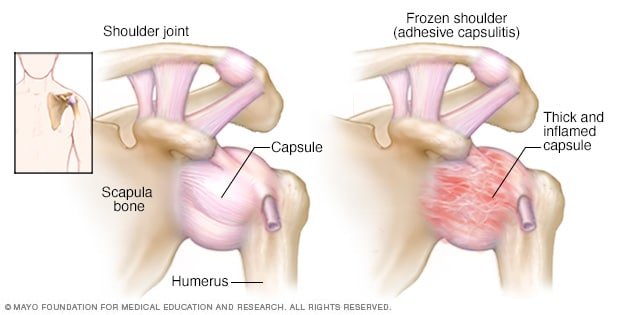
Frozen Shoulder
Adhesive capsulitis, also known as frozen shoulder, is a condition marked by a painful onset followed by gradually reduced active and passive glenohumeral joint range of motion. Over a variable amount of time, the condition can spontaneously heal completely or almost completely.
Overview
One of the symptoms of a frozen shoulder is shoulder pain. This pain usually prevents you from moving your arm, which can lead to stiffness and even paralysis. Frozen shoulder, also known as adhesive capsulitis, is usually caused by inflammation. Ligaments in the shoulder capsule hold the shoulder bones together. When the capsule becomes inflamed, the shoulder bones can not move freely in the joint.
Causes
The majority of the time, frozen shoulder is not caused; however, there are some risk factors to consider: Diabetes, thyroid issues, Hormonal changes such as those that occur during menopause, injury to the shoulder, surgery on the shoulder, open cardiac surgery, and neck disease affecting the cervical disc.
Symptoms
The inability to move due to pain and stiffness is the primary sign of a frozen shoulder. Most likely, one shoulder will hurt dullly or achingly. The shoulder muscles that encircle the upper part of your arm may also hurt. Your upper arm could be experiencing the same thing. Sleeping can be difficult if your pain gets worse at night. When you have a frozen shoulder, you typically experience these three stages.
Stage of freezing: Every time you move your shoulder, you experience pain, sometimes severe. It may hurt more at night and gradually worsen over time. You can't move your shoulders as much. This phase may extend for six to nine months.
Stage of frozen: Although your pain may subside, your stiffness may increase. It becomes more difficult to move your shoulder and to perform some daily tasks. This phase may extend for four to twelve months.
Phase of thawing: Your range of motion begins to return to typical. It may take as long as two years or five months to complete.
Ayurvedic View
Apabahuka, amsa shosha- Disease affecting amsa sandhi (shoulder joint) due to prakupita (aggravated) vata dosha, which causes shoshana (depletion) of amsa sthitha sleshmaka kapha (synovial ) and causes shoola (pain) and kriya kashtatha of using amsa sandhi-aankunchana and prasarana (extension and flexion movement becomes difficult ) and restricted. The Ayurveda way of approach is to correct agni (metabolism), bring back the dosha to the prakruta avastha (balance state) and to rehabilitate the affected area by Ayurvedic panchakarma treatment and treatment for the shoulder, so as to nourish and reduce the symptoms.
Frozen Shoulder
Treatment for
DISCLAIMER: Listed treatment details are only for information purposes. Treatments and duration may vary depending on numerous factors. Treatments for your condition may not be limited to this list.
Results of our Treatment


+91 8870037888 |+91 9363242525